
In celebration of World Bee Day, May 20, 2026.
The world of bees is amazingly diverse, with more than 20,000 species recognized to date. Work being done by one of our partner organizations, the Native Bee Society of BC, has identified 10 species not previously recorded for BC and brought the total known for our province to about 500. Most of those species can only be identified by experts using microscopes, and their work is being used to build a BC Bee Atlas. Our area has lower bee diversity than Vancouver Island or the BC Interior but nevertheless we have much to see and learn close to home. Community scientists around Squamish have been using iNaturalist to report and provide preliminary identifications, working from photographs. Experts have confirmed at least 26 identifications to species based on these photographs.
Scientists have organized bees into six families, and we have members of five in Squamish. Here are some details.
The Apidae family includes our bumblebees, the honey bees (non-native!), and some species of cuckoo bees. (Cuckoo bees steal food or prey from another bee: for more information.) The Apidae family represents over 60% of the 900 bees reported to iNaturalist for Squamish, in 11 confirmed species.
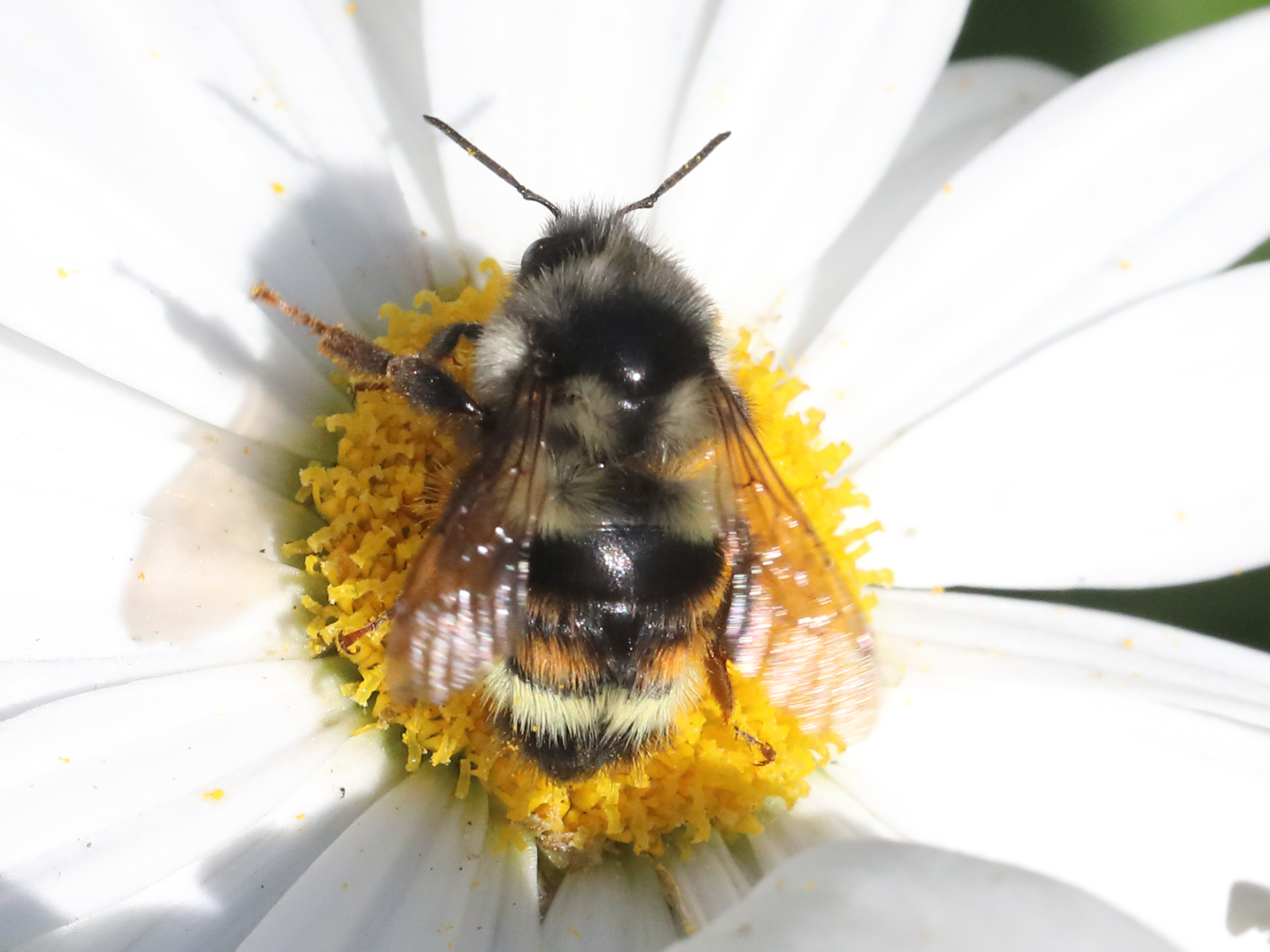
Vancouver bumble bee, found west of the Rockies from California through Alaska.
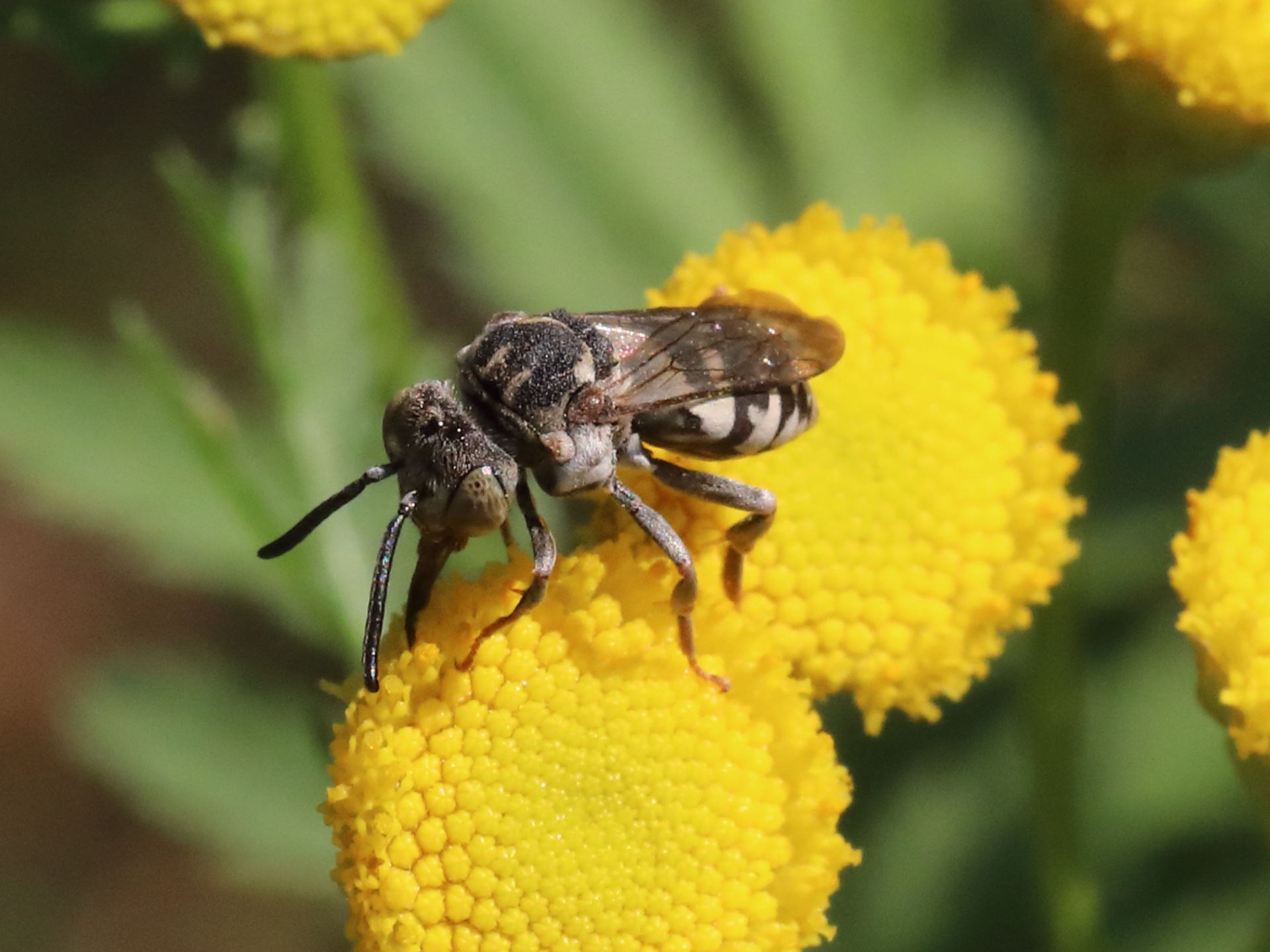
This Olympia cellophane-cuckoo bee is a member of the Apidae family and belongs to a different subfamily than our bumble bees.
The Megachilidae, at about 130 observations (14%) is our next most-represented family, and includes mason bees, leafcutters, woolcarders and resin bees. The only mason bee we’ve identified to species is our appealing little western blue orchard bee. We’ve confirmed nine other species, mostly leafcutters.
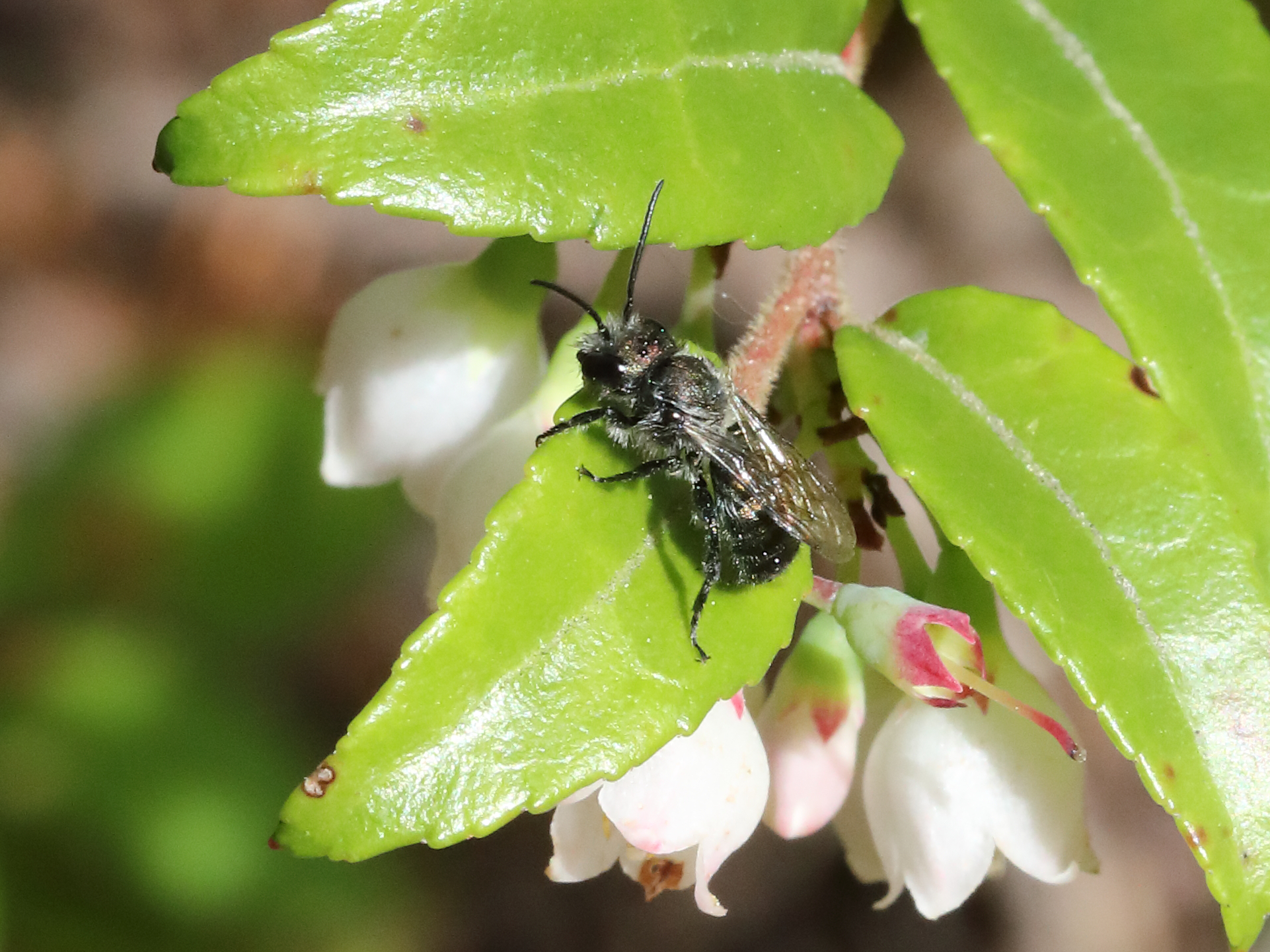
The tiny western blue orchard bee is an important pollinator for fruits.
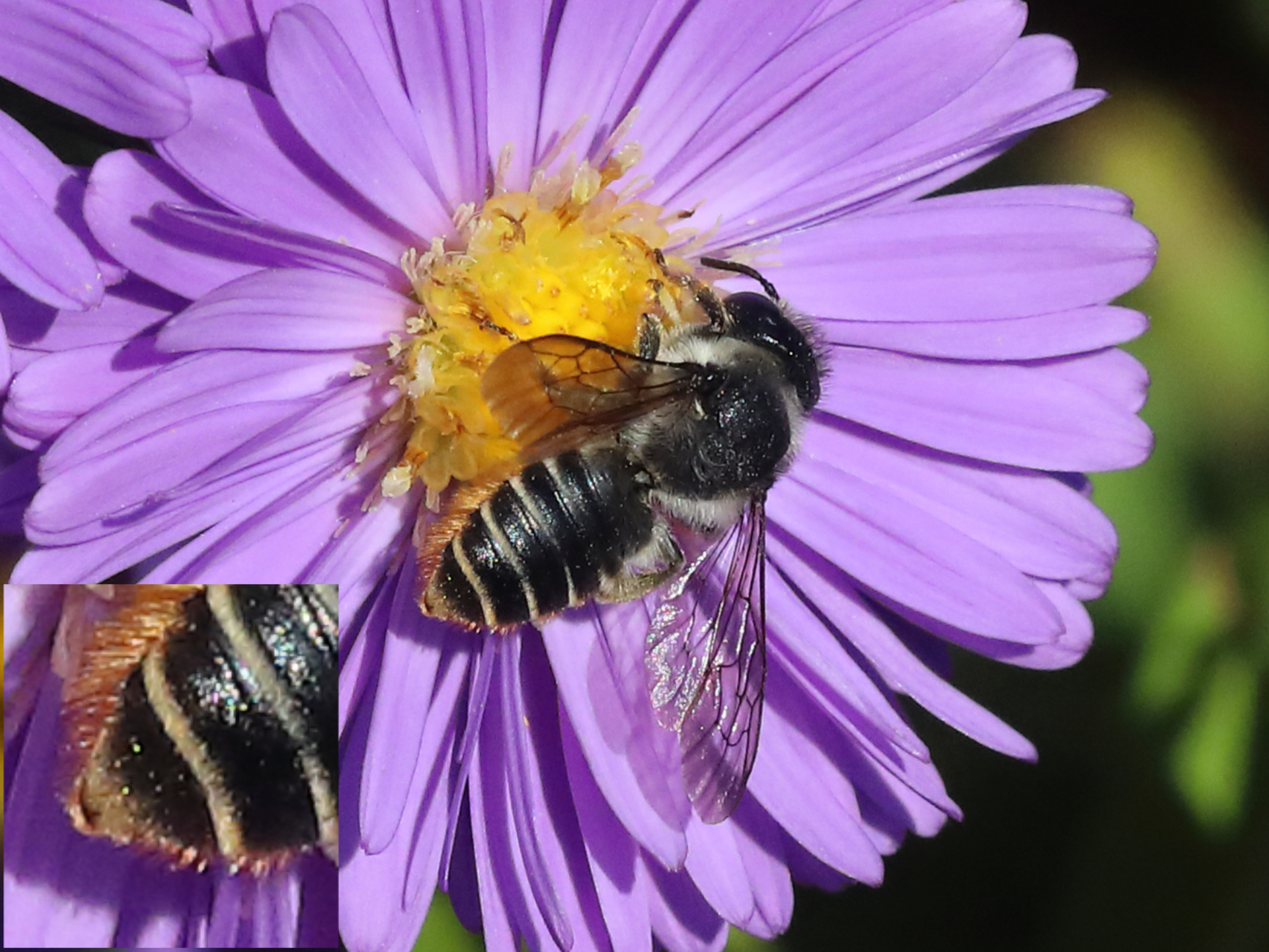
A female golden-tailed leafcutter: other leafcutters can be mistaken for this species if they have yellow pollen on the top of the tip of their abdomens rather than the golden hair we see here (inset).
The Halictidae are the sweat bees, a family with considerable variation in size, shape, and colour. They represent 12% of our observations, but we’ve confirmed just three species. Here are the two most commonly seen: the orange-legged furrow bee and the fine-striped sweat bee.
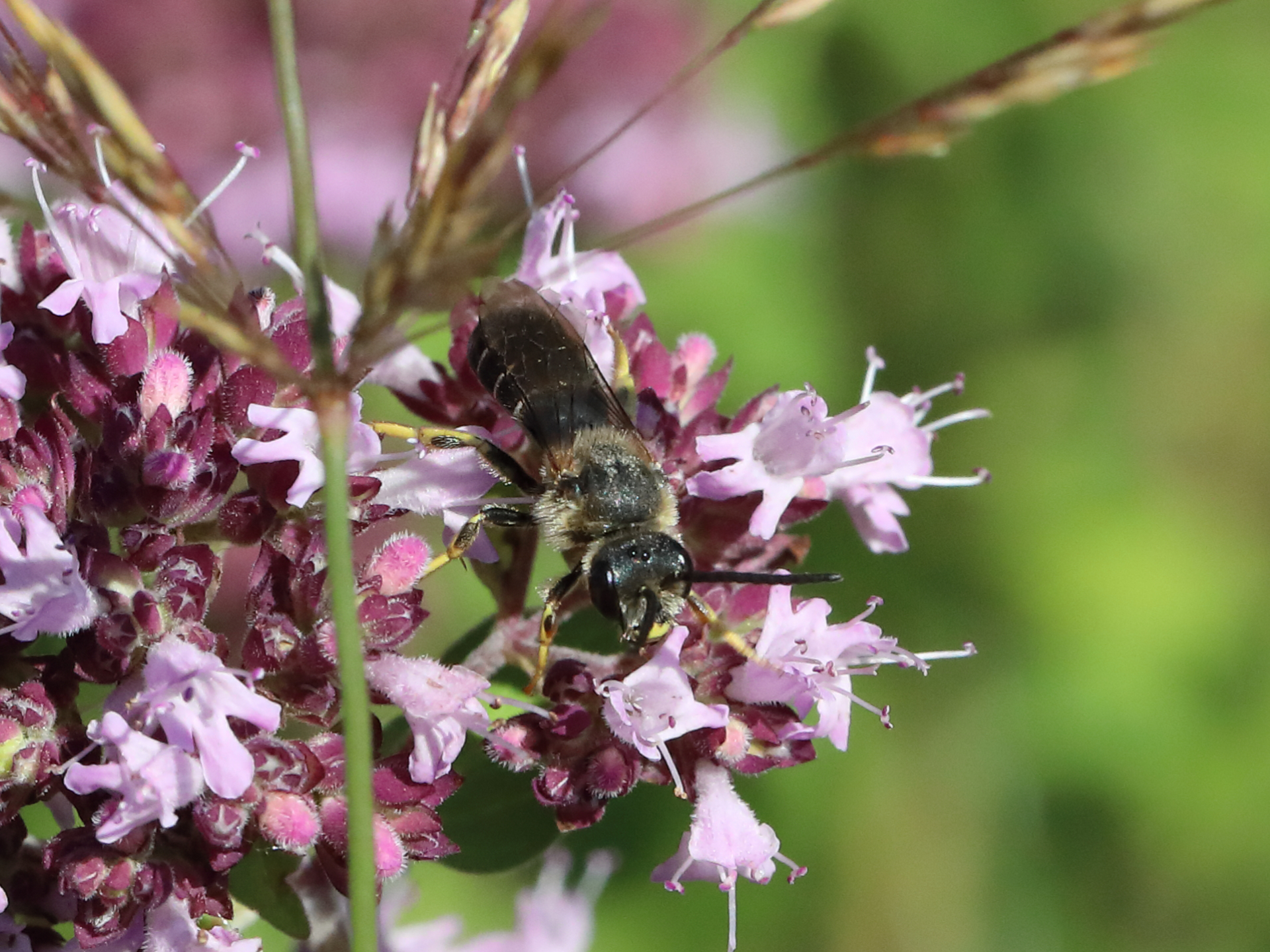
Male orange-legged furrow bee: the orangish-coloured legs and the white patch on the face are distinctive.
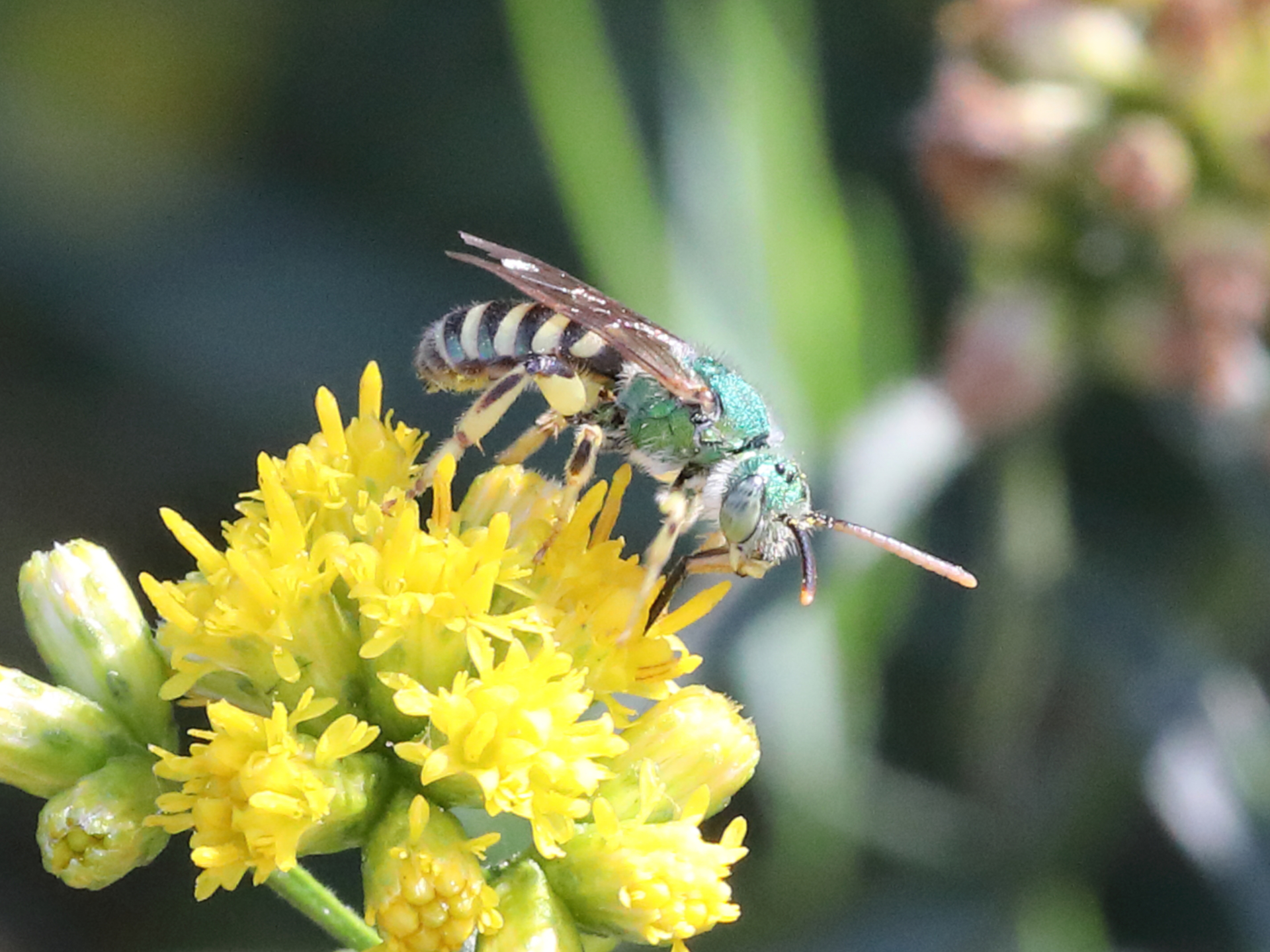
Male fine-striped sweat bee with species proven by three characteristics: dark scapes (base of antennae), inflated hind femur, and green metallic reflection from dark stripes on abdomen.
The Andrenidae are commonly known as mining bees. We’ve observed fewer than 100 individuals in Squamish, about 11% of our total. This family also varies widely in size and colour. Most of these ground nesters emerge early in the season: an exception is our British Columbia miner bee which we’ve seen a few times in August. We’ve confirmed one other species, the prunus miner bee.
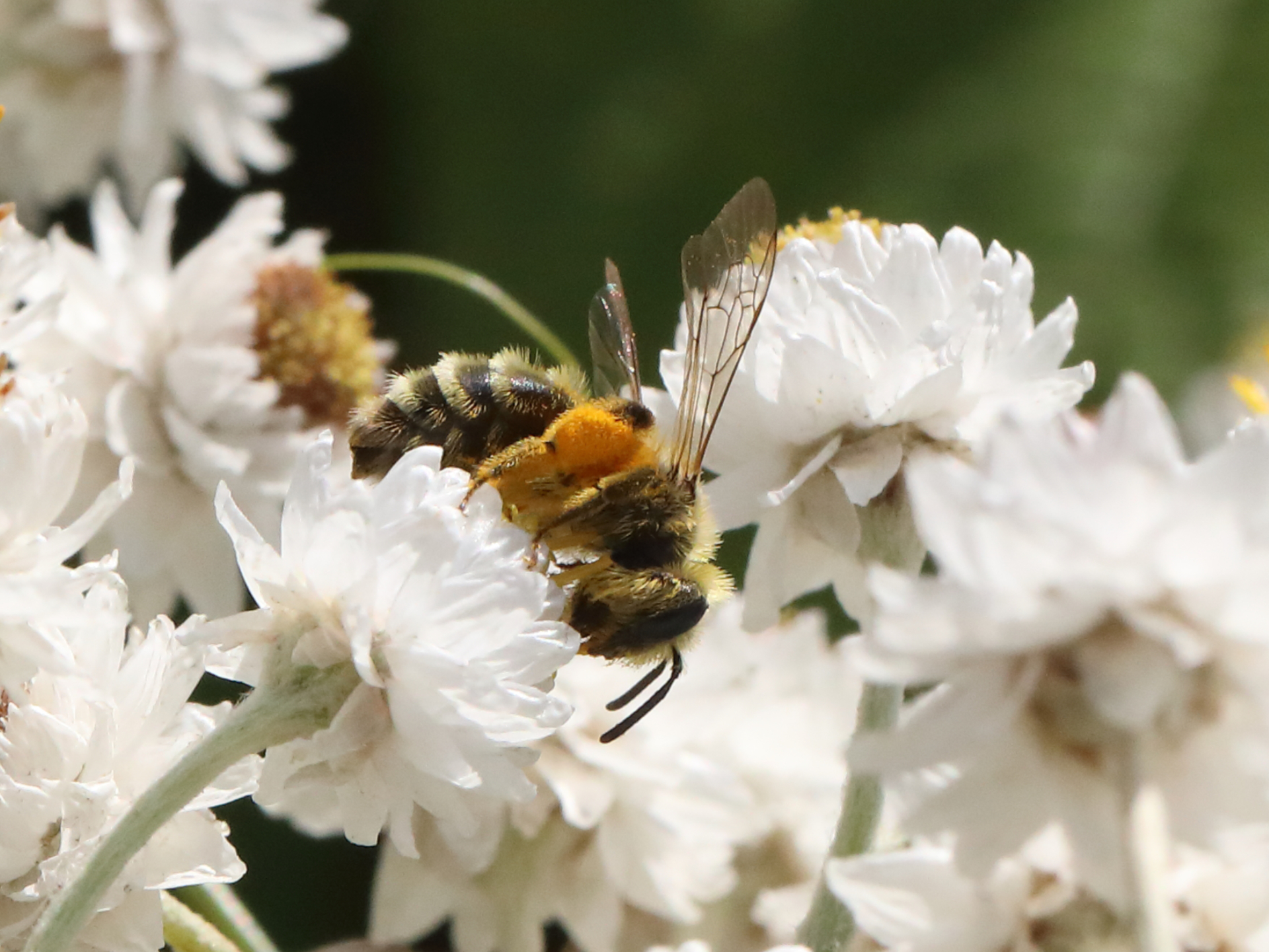
British Columbia miner bee female: a less common species that emerges in late summer rather than in spring like most other mining bees. Wing detail helps confirm the identification.
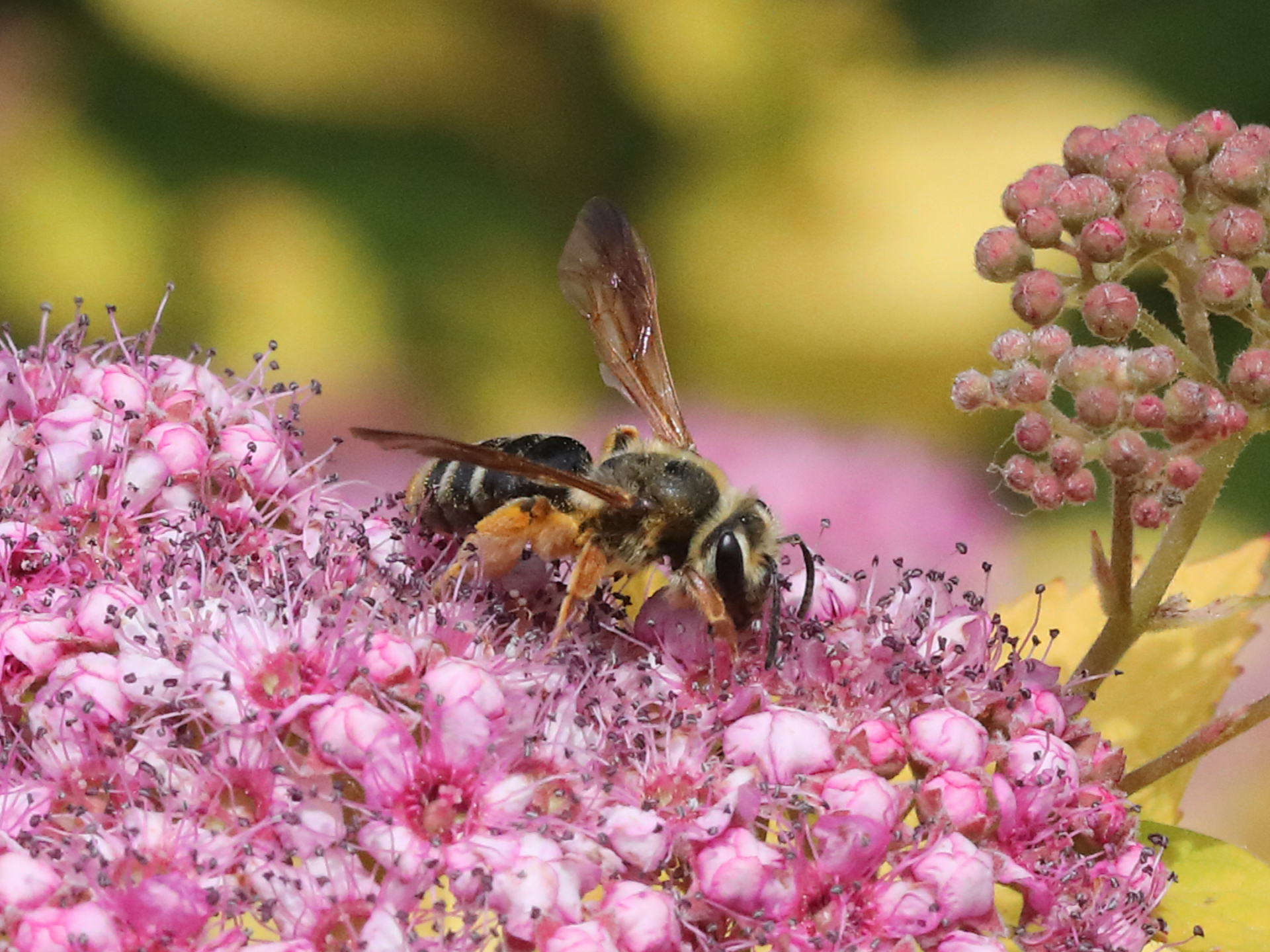
Prunus miner bee female: note the overall reddish appearance, dark wing tips, hair in facial fovea (grooves inboard of the eyes). This female also had a red “skirt” of hair at the tip of her abdomen, just visible here.
The Colletidae, the plasterer bees, are our least-represented family. We have just 14 observations. Most of those reported belong to the cellophane bee genus Colletes. We have just one confirmed species, the punctate masked bee, which was introduced to North America from Europe in about 1980.
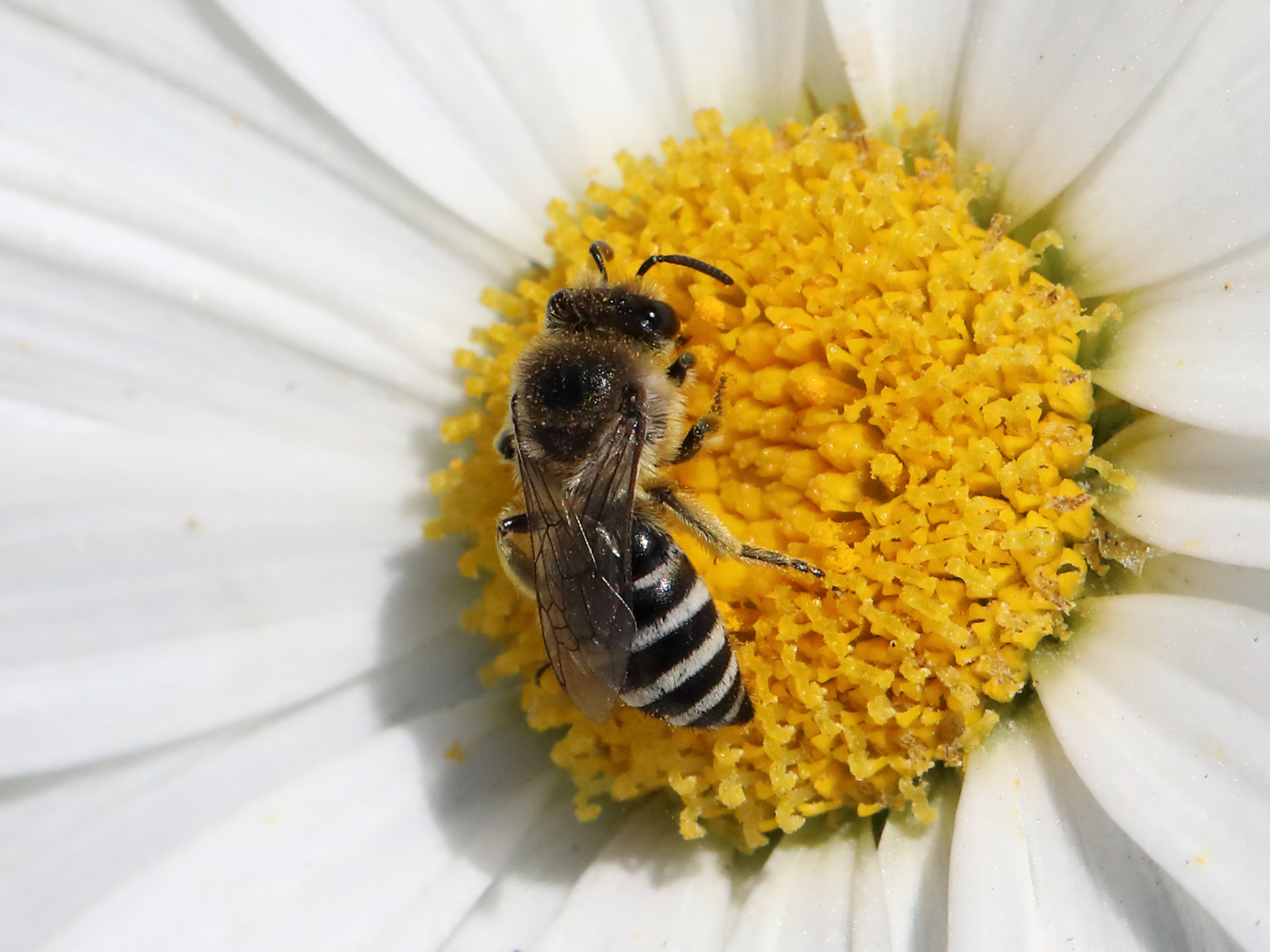
A female cellophane bee, Colletes. Only three species have been confirmed for BC in iNaturalist although 33 have been recorded for Canada in historical records. iNaturalist has over 600 BC records for cellophane bees but only eight have been assigned to a species: these bees are very difficult to identify from photos. A heart-shaped face and a tear drop-shaped abdomen (as seen here) are characteristic.
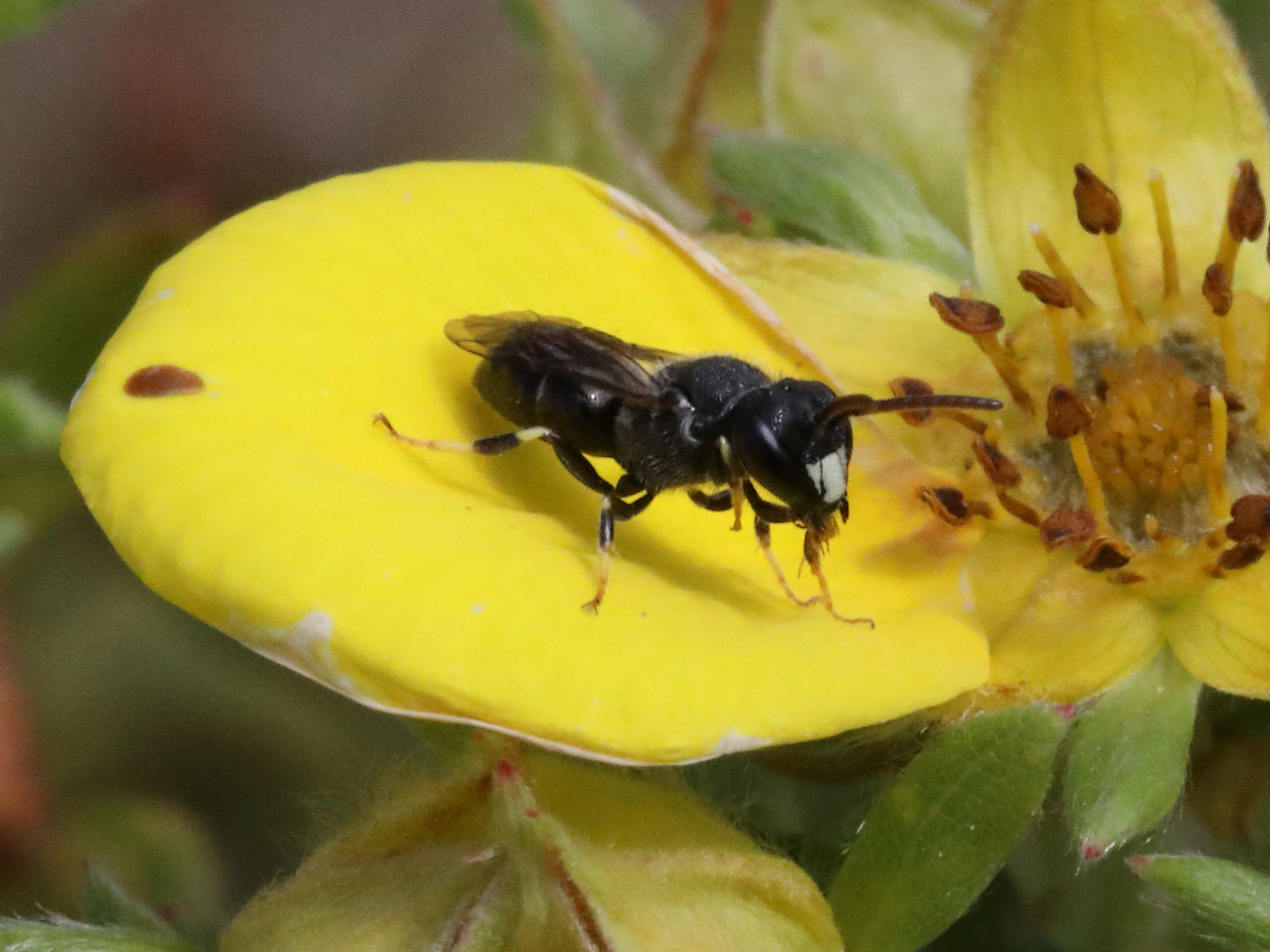
A tiny punctate masked bee, distinguished by the yellow markings on its legs and the pale markings on its face. This species frequents a shrubby rock rose hedge every summer in my neighbour’s yard.
If you’d like to learn more, you might consider “The Bees in Your Backyard: a Guide to North America’s Bees“.
Thanks for caring.
Gwen, an interested amateur.
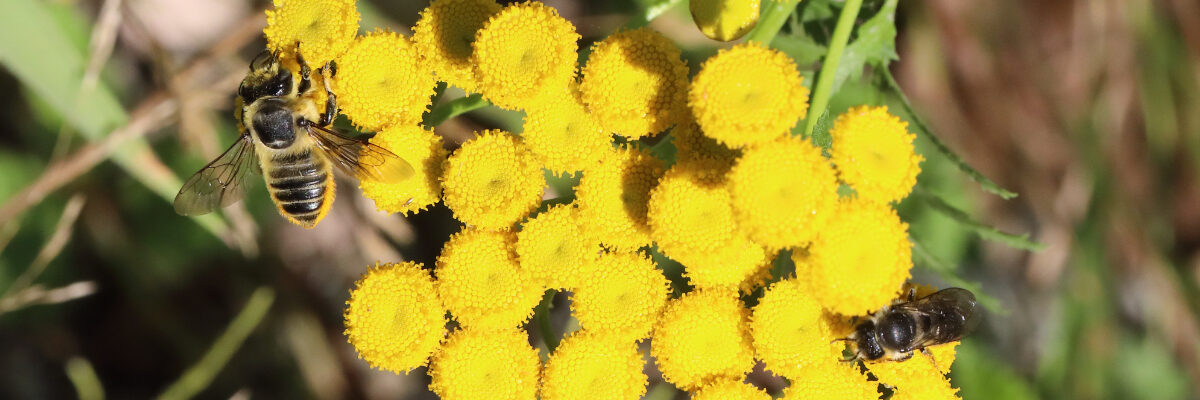
Banner photo: Two female bees from the Megachilidae family. At top left there’s a western leafcutter (our biggest and most commonly-identified leafcutter) with at lower right a much smaller leafcutter who can’t be identified to species from this photo.