
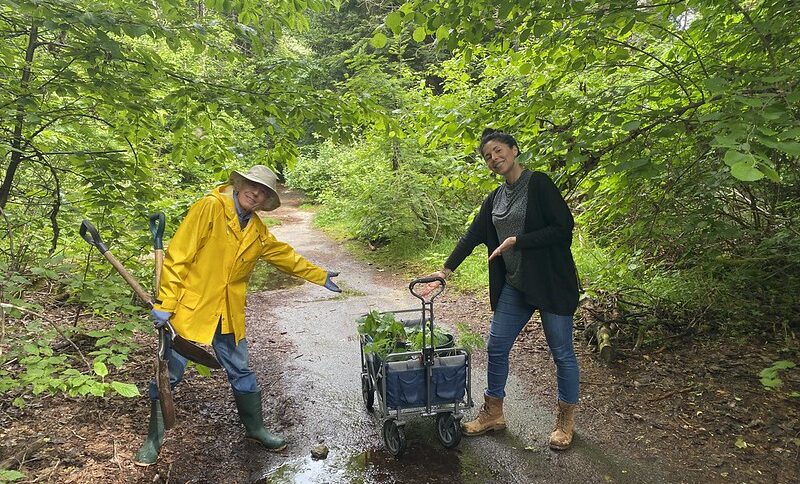
Our Native Plant Salvage event was a huge success, with over 30 people dropping by to take home a variety of native plants to re-wild the land. The plants were removed from a site slated for development, with the approval of the landowner and will be used in home gardens as well as local restoration projects. Nature Squamish and Squamish River Watershed Society (SRWS) volunteers and Matthews West staff were on hand, to advise on plant selection and the benefits of using native plants in the garden. Matthews West staff were also available to answer questions about the Cheekye River Development.
Don’t worry if you missed out! We are hoping to organize another plant salvage in the fall and will publicize details on our website, newsletter and social channels.
Many thanks to Matthews West for allowing site access and helping coordinate the event, to our volunteers for providing guidance to eager plant collectors, to SRWS for providing tools and support, and to Tiffany for pulling it all together!


Why Native Plants Matter
Native plants are those that occur naturally in a region.
Advantages of Native Plants
- Low maintenance: Once established, native plants generally require little maintenance.
- Beauty: Many native plants offer beautiful showy flowers, produce abundant colorful fruits and seeds, and brilliant seasonal changes in colors from the pale, thin greens of early spring, to the vibrant yellows and reds of autumn.
- Conserving Water: Because native plants are adapted to local environmental conditions, they require far less water, saving time, money, and perhaps the most valuable natural resource, water.
- Wildlife: In addition to providing vital habitat for birds, many other species of wildlife benefits as well. Native plants provide nectar for pollinators including hummingbirds, native bees, butterflies, moths, and bats. They provide protective shelter for many mammals. The native nuts, seeds, and fruits produced by these plants offer essential foods for all forms of wildlife.
Native Plants in the Garden
- Choose plants that are suitable for our region. The David Suzuki Foundation, Sea to Sky Invasive Species Council, and Fraser Valley Conservancy all have resources to help you choose suitable plants and use them in your garden. The book Gardening with Native Plants of the Pacific Northwest is also a great resource.
- Source plants responsibly, from native plant nurseries, or from disturbed sites with the approval of the landowner.