
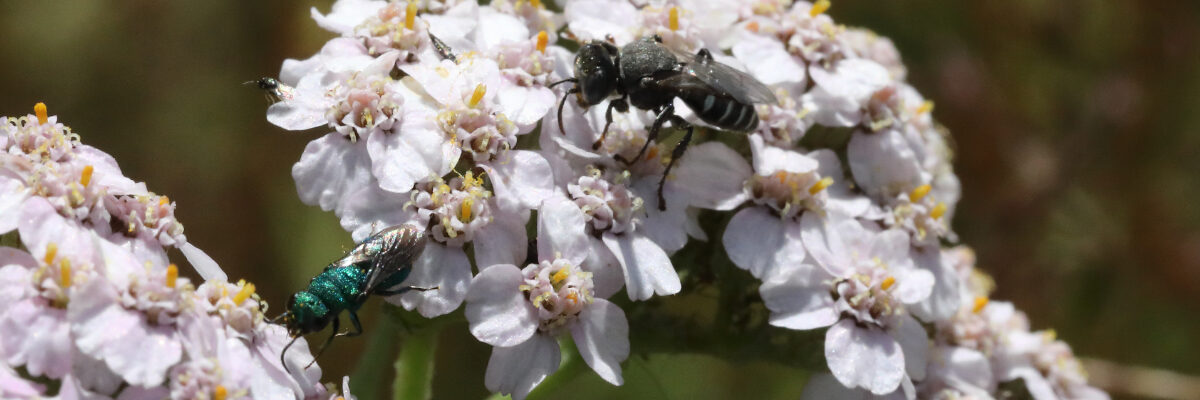
Insect photography in the field is a lot like sports photography. Find the action and then follow it! At the same time, don’t forget to keep an eye on the rest of the field. You might miss something.
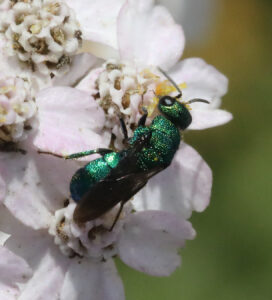 My favourite spot for pollinators this summer offered a great example of this. I was excited to find and be able to photograph beautiful cuckoo wasps (genus Hedychrum). These brilliantly coloured insects are quite small (about 5mm) and on a windy day it can be tricky to locate them with a camera and then to track them as the flowers bob around in the wind.
Once I got home and checked the photos on my computer, I was surprised to see that my cuckoo wasp had been sharing its flower with a larger wasp, a fly hunter (genus Oxybelus).
Perhaps you’re startled to read that wasps are considered pollinators and see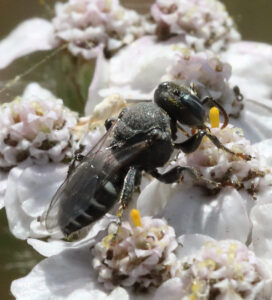 that some can be quite beautiful. The wasps we know as “yellowjackets” can give other wasps a bad name because of their interest in our food at summer picnics. Many other wasps, like these two, go about their business pollinating flowers and giving their young a start.
The adults of both these wasps feed on nectar: in this case, it’s from common yarrow, a widespread native plant that is long-blooming and important for many species.
These wasps differ in how they provide for their young. The cuckoo preys on beetle-hunting wasps. After locating a beetle-hunter’s nest, the female cuckoo enters the nest and lays an egg in an open cell already provisioned with prey. After the cuckoo’s egg hatches, the larva kills the host young and consumes the beetles that have been provided. In contrast, the female fly hunter stings flies and carries them back to her nest, where she provisions each egg with several flies before she closes up the cell.
The range for both these genera of wasps includes Squamish, but neither had been reported in iNaturalist or in historical records before my observations. Maybe next July you’ll be able to find them too. Start by finding the flowers ….
Information and photos from Gwen, an interested amateur.