
Birds face many human-related threats, but the good news is that many of them are preventable. Here are some practical steps you can take to make a real difference:
1. Make glass safer
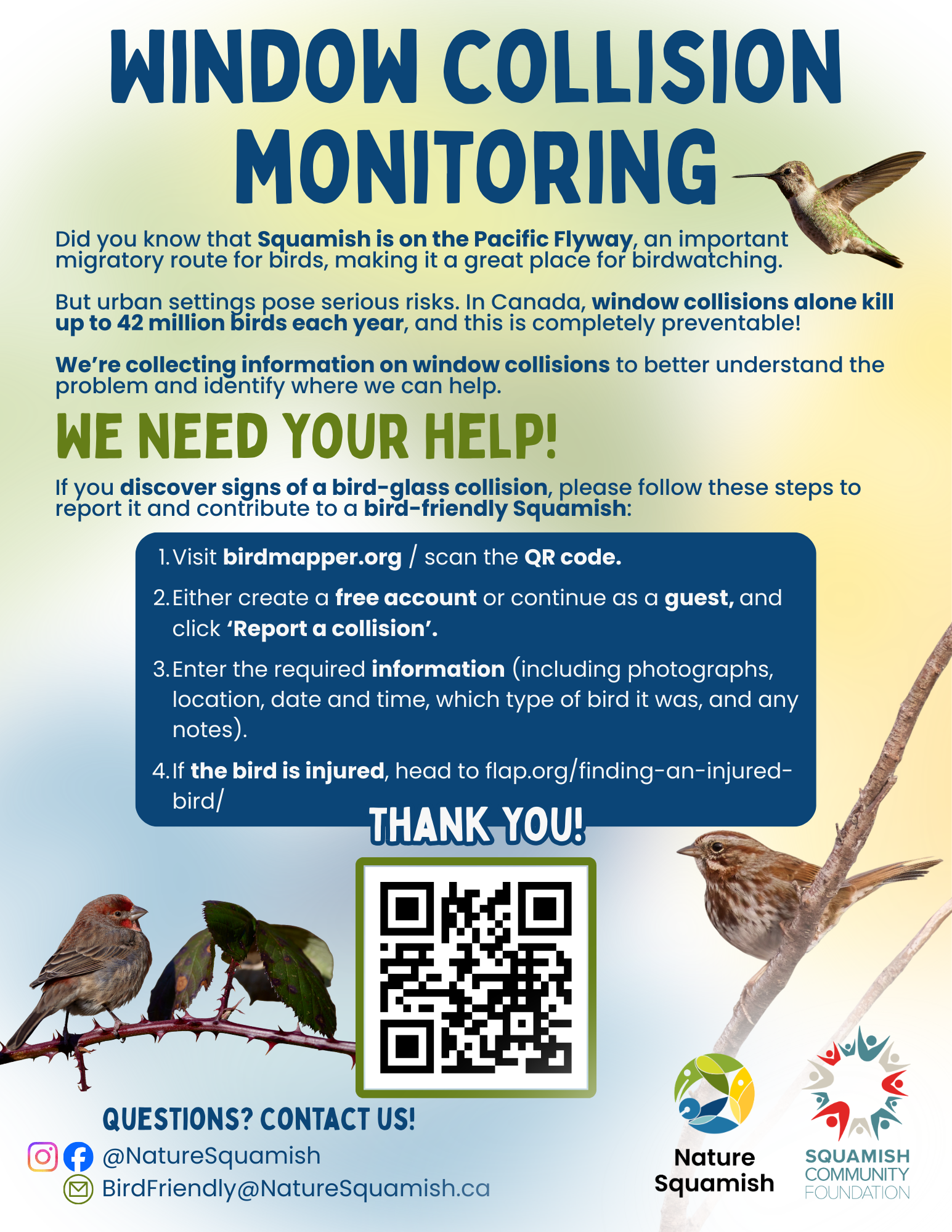
Around 42 million birds are killed each year by colliding with glass, including windows, doors, and railings. This problem is easily preventable by retrofitting existing glass with decals or DIY markers to break up the reflection and ensure the birds see the barrier.
As long as markers are spaced 2 inches apart, you can choose to install markers such as Feather Friendly decals, or DIY with a chalk marker and a grid!
2. Report bird-glass collisions
We have developed a passive community science project aimed at recording bird-glass collisions in Squamish. This will help identify high-risk areas so that we can focus our efforts to protect resident and migratory birds.
Scan the QR code or visit Global Bird Collision Mapper to get started!
3. Keep cats indoors
Unfortunately, our furry friends aren’t good news for birds. It is estimated that cats kill up to 100 million birds per year in Canada alone.
The best way to reduce this statistic is to keep cats indoors, or use a ‘catio’ or a leash when they are outside. Keeping your cats close also protects them from the dangers of outdoor roaming including cars, disease, predators, and secondary poisoning. As a cat owner, you play an important role in keeping your pet safe and helping reduce their impact on birds.
4. Create habitat for birds
An effective way to create habitat for birds can start in your own garden. Birds Canada have compiled a wealth of resources to help you ‘garden for birds’, helping you plan your bird-friendly garden tailored to your location!
When picking out new plants, choose native or non-invasive plants. Even check your bird seed mix, because invasive species can sneak into there too! The Sea to Sky Invasive Species Council has information on checking for common invasive species that turn up in bird seed.
5. Avoid pesticides
Birds can be affected by pesticides and herbicides by eating contaminated seeds, fruits, or prey. Pesticides also kill insects, which reduces the number of food sources for insectivorous birds. In fact, birds that eat insects in flight (such as Western purple martins and tree swallows) have shown some of the steepest declines in population of any bird group.
At home, you can follow bird-friendly gardening practices, and check out the Environmental Working Group’s guide on pesticides in produce from USDA data.
6. Become and IBA/KBA Caretaker
You could also support efforts to maintain and enhance Important Bird Areas (IBA) and Key Biodiversity Areas (KBA) (AKA nature’s backyard). The Squamish River has been identified as an IBA since the mid 1990’s and a KBA since 2025.
Caretakers play a vital role as community champions by monitoring these sites, documenting threats, and helping protect their ecological integrity.
7. Choose bird-friendly coffee
Millions of acres of forest have been cleared to increase crop yields. Choosing to buy certified, shade-grown, bird friendly coffee for personal or commercial use is a great step. Visit the Smithsonian’s website to learn more and find a retailer.
8. Reduce your plastic use / responsible plastic use
Plastic pollution harms birds through ingestion and entanglement, and microplastics can absorb contaminants and build up to toxic levels in wildlife when ingested.
With more than one-third of plastic created for single-use items, reducing our plastic use by refusing disposable items and recycling responsibly goes a long way to help. Squamish has a bylaw to reduce single-use plastics, and SquamishCAN has tips for Zero Waste Living.
Also, skip the fake cobweb decorations outdoors at Halloween: they can trap birds and other wildlife!
9. Try birdwatching!
One of the best ways to protect birds is to connect with them.
Join our Monthly Estuary Bird Count, use eBird to log sightings, or take part in seasonal events like a Christmas Bird Count or EagleWatch. All experience levels are welcome.
Check out our page to learn more and join in!
Protecting birds doesn’t require big changes, just thoughtful ones. Together, small actions can make a big difference!