
When people think about pollinators, many picture bees. However, pollinators come in many shapes and forms, each with their own unique attributes and habitat needs. In addition to bees, animals such as beetles, butterflies, moths, flies, wasps, and birds play important roles in pollination.
Hummingbirds are attracted to bright, tubular flowers, while butterflies prefer flat, open blooms where they can easily land. Some pollinators are active during the day, while others like moths are more active at night. Because of these differences, a wide variety of plants and habitats are needed to support healthy pollinator populations.
Bees (Order: Hymenoptera)
There are almost 500 native species of bees in British Columbia, belonging to six families: Andrenidae, Apidae (contains bumble bees), Colletidae, Halicidae, Megachilidae (contains mason bees) and Melitidae. Honey bees are introduced and not native to North America.
Bees range in size from 4 mm (Perdita) to 25 mm (Bombus nevadensis), have two sets of wings, eyes on the side of the head, and pollen collecting hairs on legs or belly. Their diet is nectar and pollen.
The BC Bee Atlas is a project of the Native Bee Society. The aim of the Atlas is to increase knowledge of BC bees through data collection that maps the distribution and floral hosts of bees.
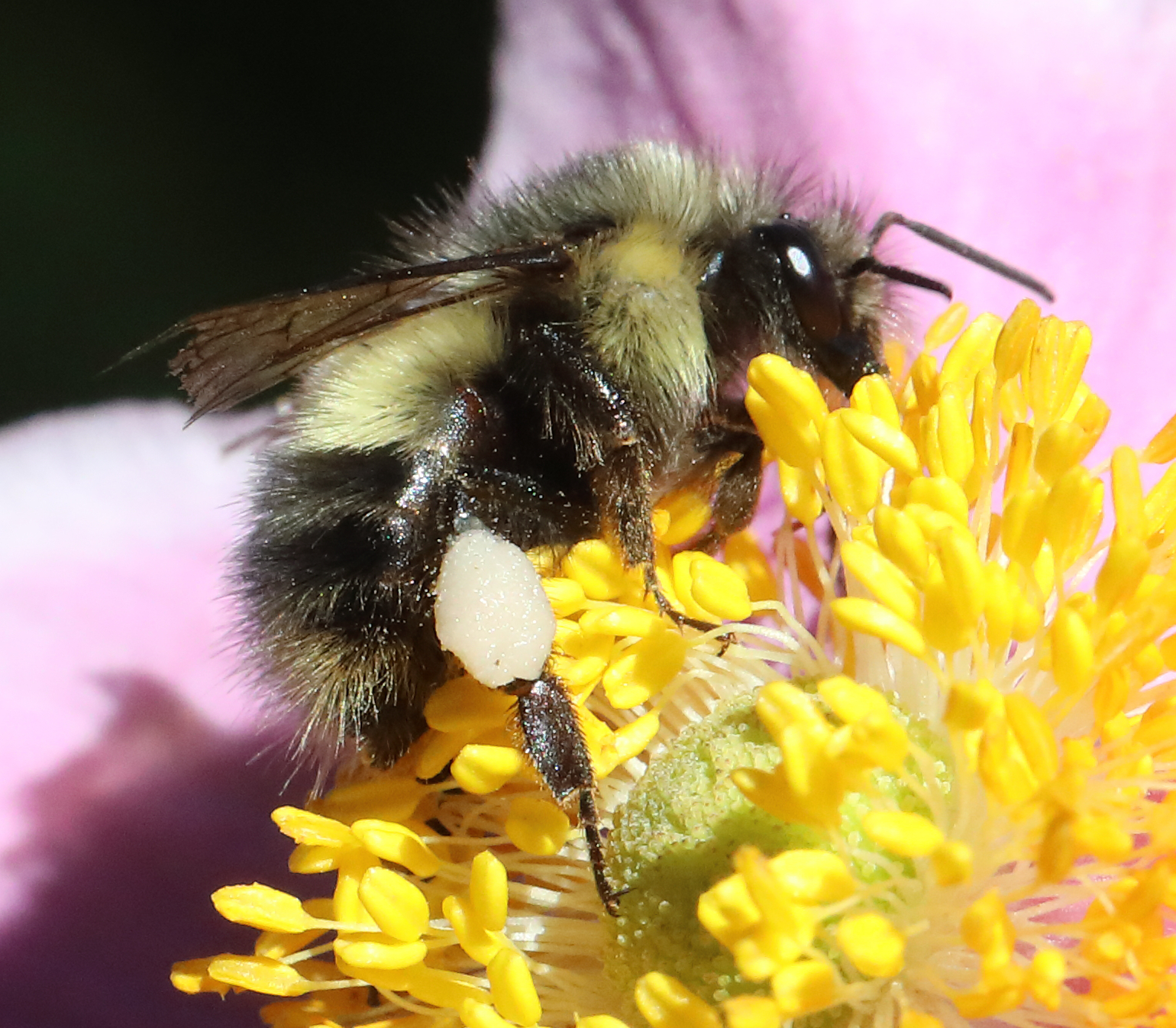
Sitka bumble bee (Bombus sitkensis)
Beetles (Order: Coleoptera)
Beetles are a large order representing about 40% of all insects. There are 100 families of beetles in BC representing over 3000 species.
Beetles have two sets of wings and most are easy to recognize by their hard forewings (elytra), which protect the delicate hind wings underneath. They may feed on pollen, nectar, flower parts, aphids, or other small insects.
Beetle-pollinated plants have evolved a number of adaptive traits: thicker flowers and leaves to withstand chewing damage; large cup or bowl shaped flowers that act as a landing pad; strong scent to attract beetles who rely heavily on smell; and daytime opening when beetles are active.
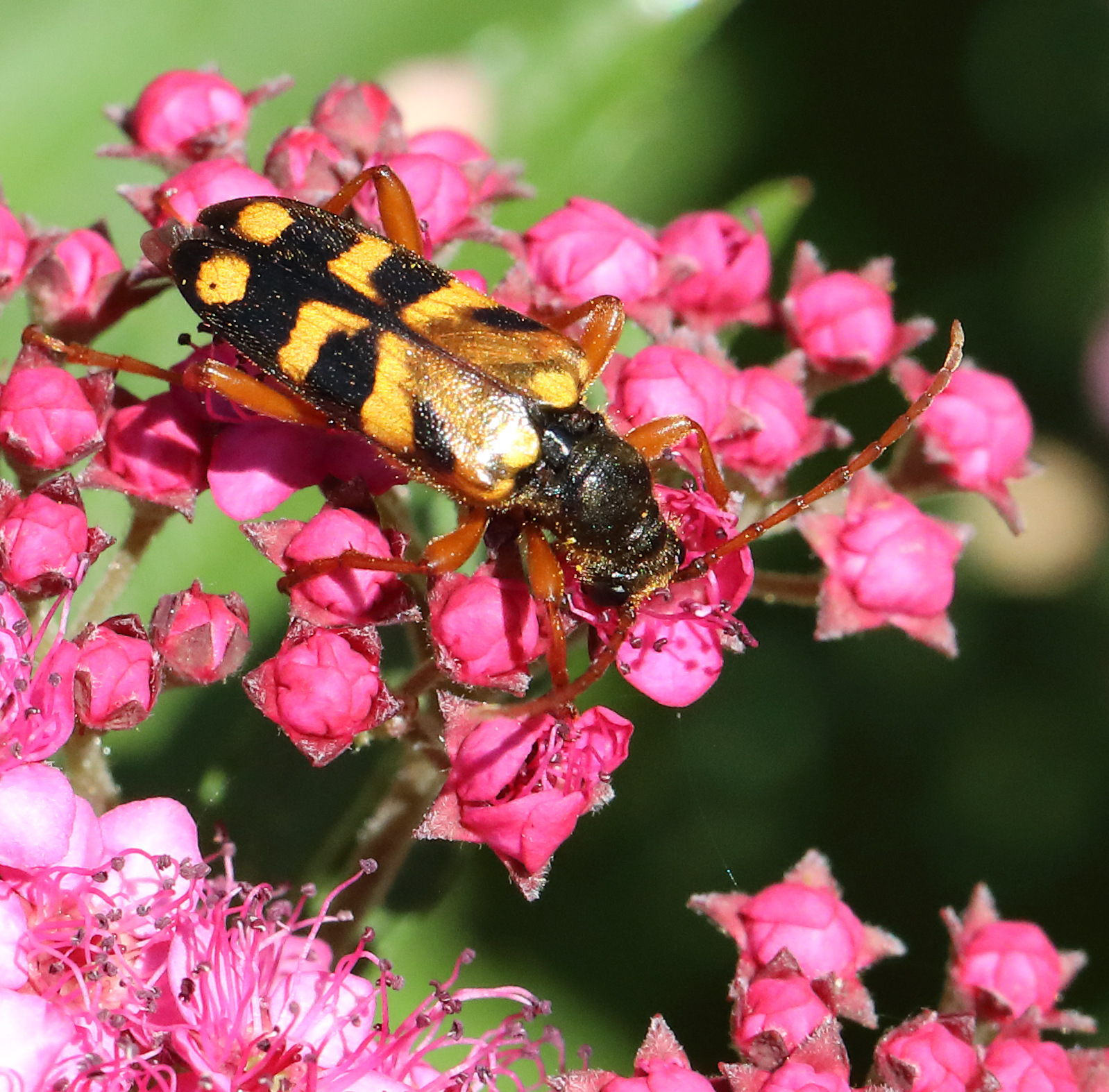
Flower longhorn beetle (Xestoleptura crassipes)
Butterflies and Moths (Order: Lepidoptera)
Butterflies and moths both belong to the order Lepidoptera. In BC 2,285 species were recorded as of 2007: 185 butterflies, 29 skippers, and 2,101 moths.
Butterflies and moths can be difficult to differentiate even for experts. Butterflies have slender antennae with a club-shaped tip, are active during the day, rest with wings closed vertically over their backs and have thin, smooth bodies. Many moths have feathery antennae and are generally stockier than butterflies. Most moths are nocturnal.
The caterpillar stage of moths and butterflies plays a vital role in ecosystems. It is the longest stage of their life cycle, represents the greatest biomass, and provides an important food source for birds. Supporting this stage requires including host plants for caterpillars.
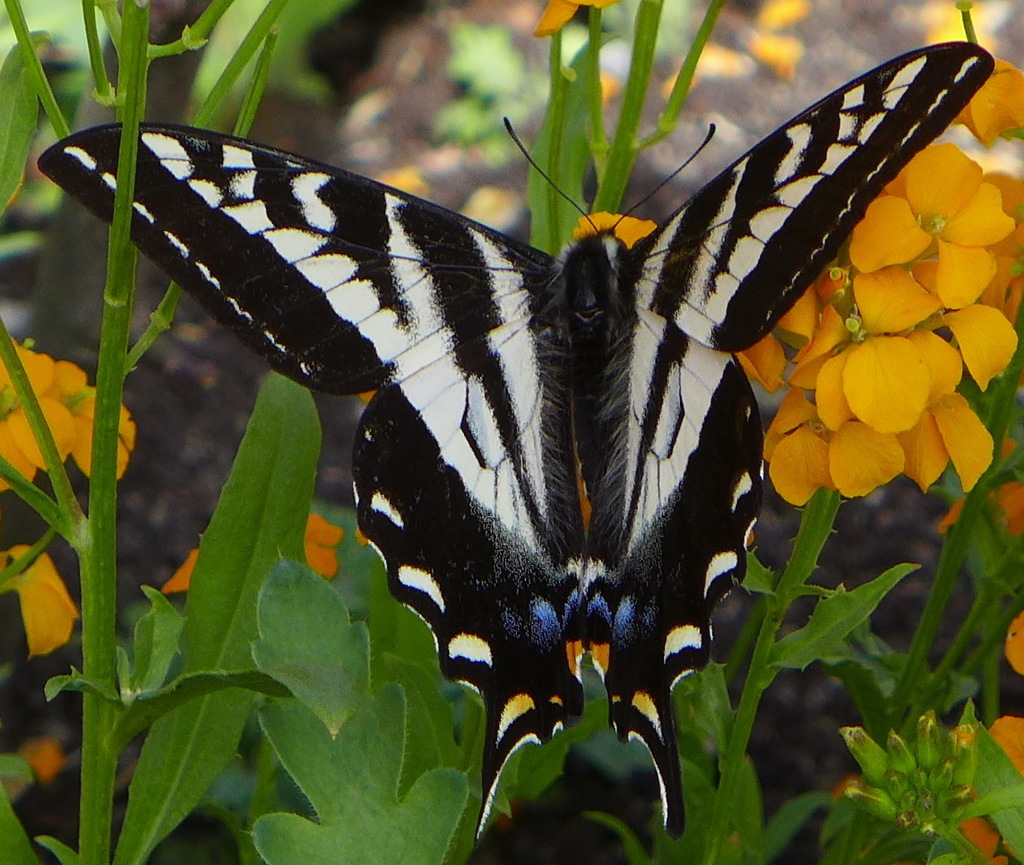
Pale swallowtail (Papilio eurymedon)
Flies (Order: Diptera)
Flies are estimated to be at least 14% of the insect population. They are abundant in number and species and show versatility in habitat and diet. Many are important pollinators, especially in cooler climates.
Most flies have large compound eyes that occupy most of their head and short antennae. Flies range in size from 0.5 to 60 mm in length and have one set of wings. Flies vary in colour and from a distance might be mistaken for bees.
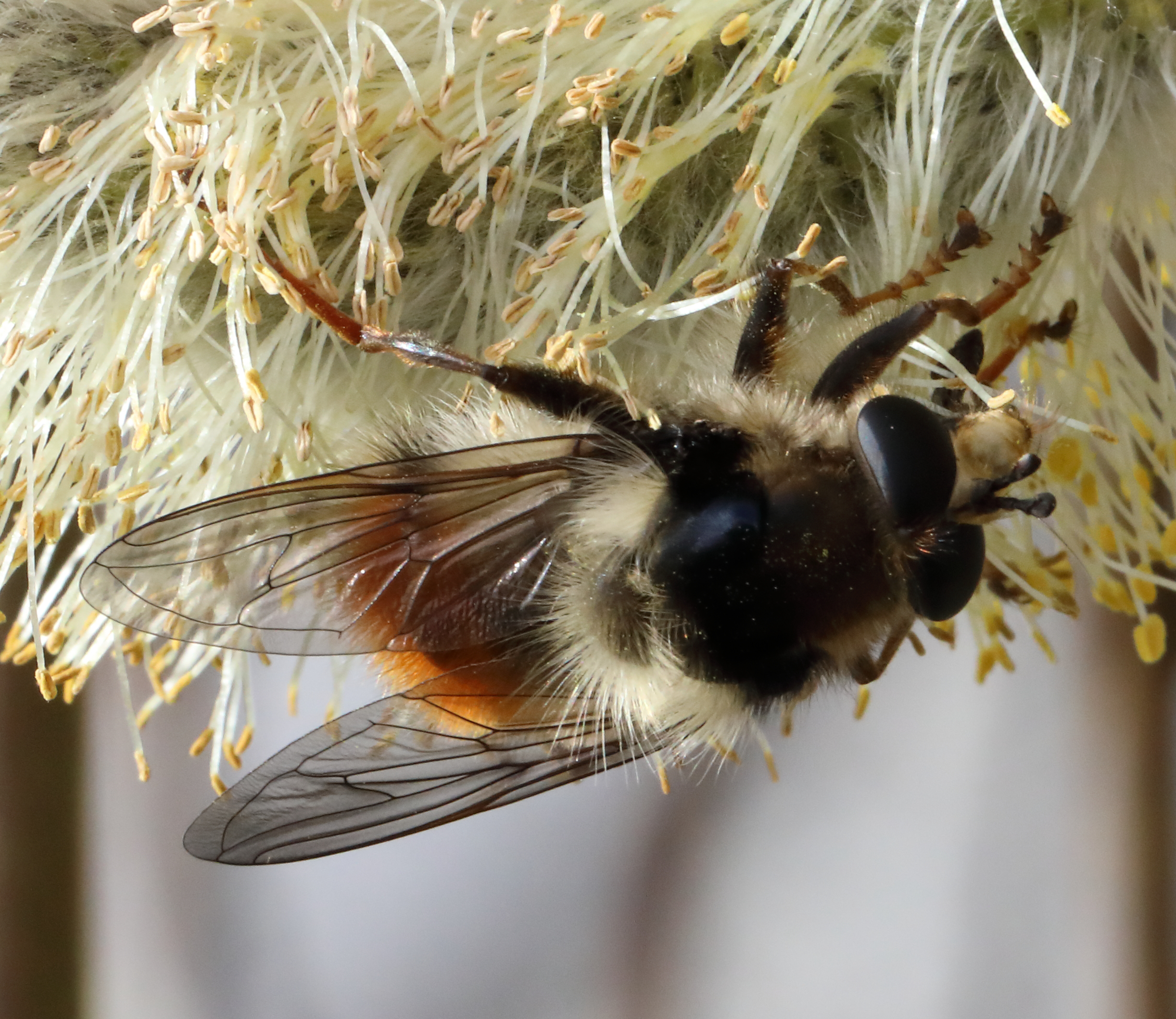
Whiskered bumble fly (Criorhina bubulcus)
Wasps (Order: Hymenoptera)
There are two groups of wasps. Many persons are aware of social wasps (yellow jackets, paper wasps, hornets) but the vast majority of species are ground nesting, non-aggressive, solitary wasps. In BC there are around 300 recognizable wasps but total actual species may be in the thousands.
Wasps range from 1 mm to about 35 mm in size, have smooth bodies, narrow waists, long thin legs, two sets of wings and not much hair. As adults, wasps feed on plant nectar and assist in pollination. Additionally, wasps feed their young insects and help control pest populations.
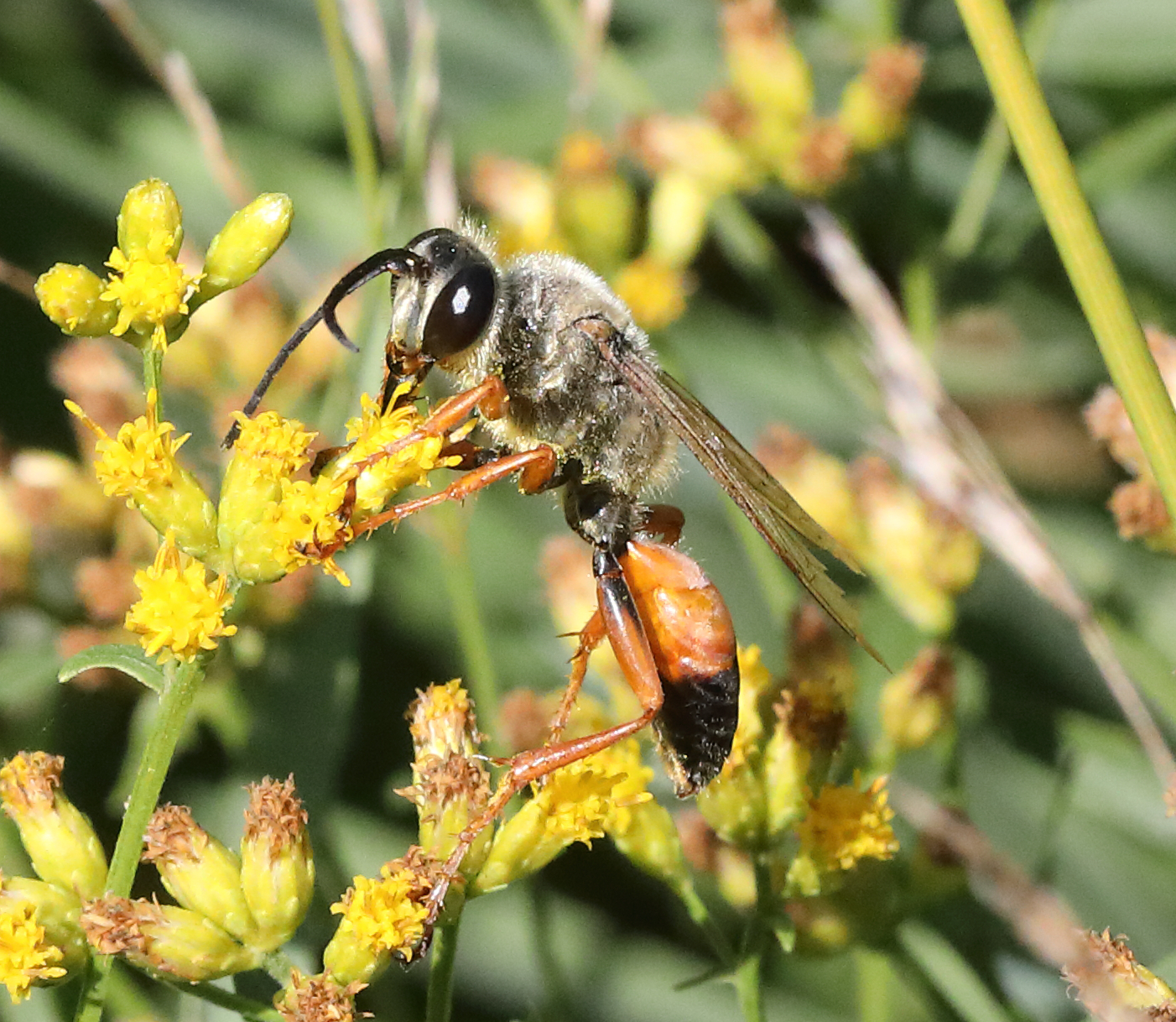
Great golden digger wasp (Sphex ichneumoneus)
Hummingbirds (Order: Apodiformes)
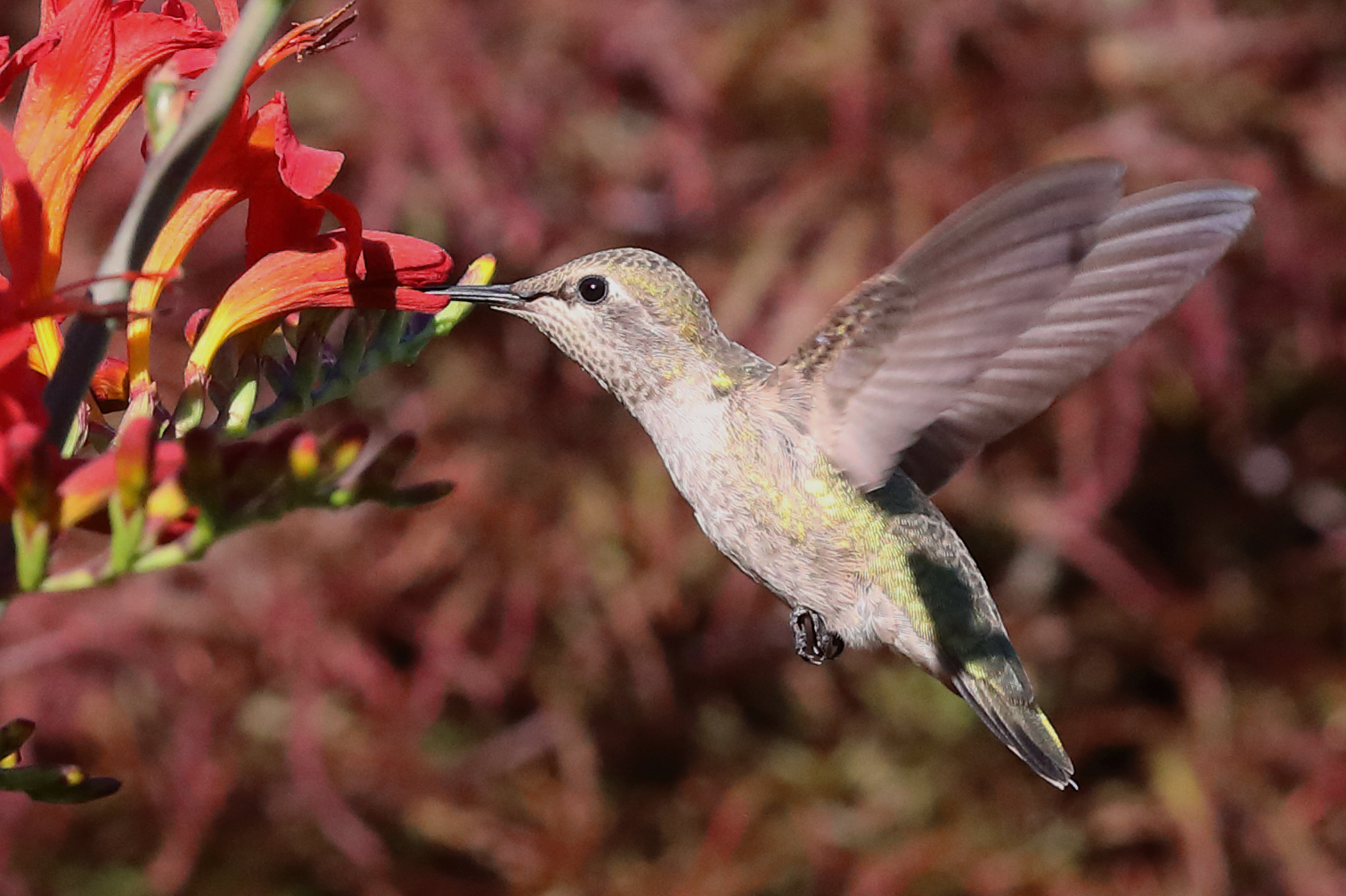
There are over 300 species of hummingbirds, all of which are found exclusively in the Western Hemisphere. Many North American species migrate seasonally, breeding in the north and overwintering in warmer southern regions. These birds are among the smallest in the world, with some measuring as little as 5 cm in length. Hummingbirds are especially attracted to brightly coloured, tubular flowers, from which they feed on nectar. As they move from flower to flower, they carry pollen on their beaks and feathers, playing an important role in pollination. To meet their high energy demands, the National Audubon Society estimates that a hummingbird may visit up to 2,000 flowers in a single day.
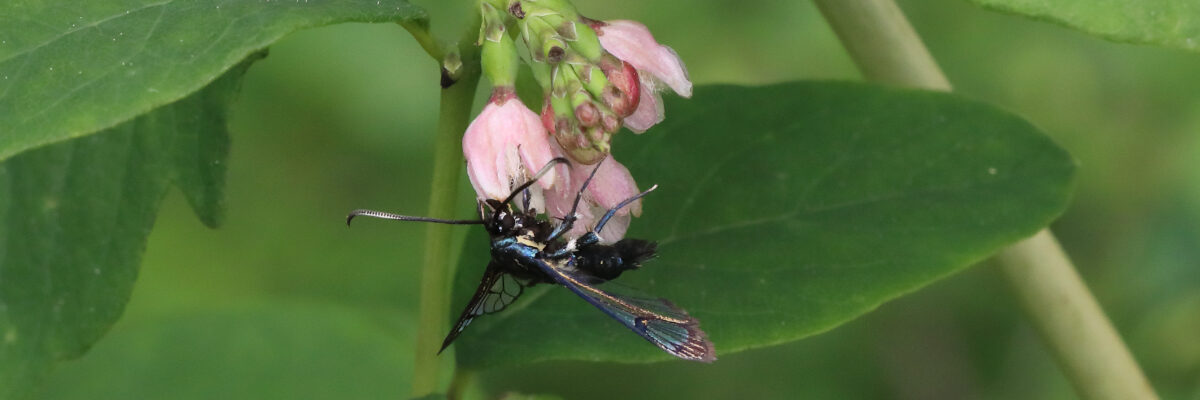
Banner photo: Western willow clearwing moth ( Synanthedon albicornis)
Images: Courtesy of Judith Holm and Gwen L’Hirondelle